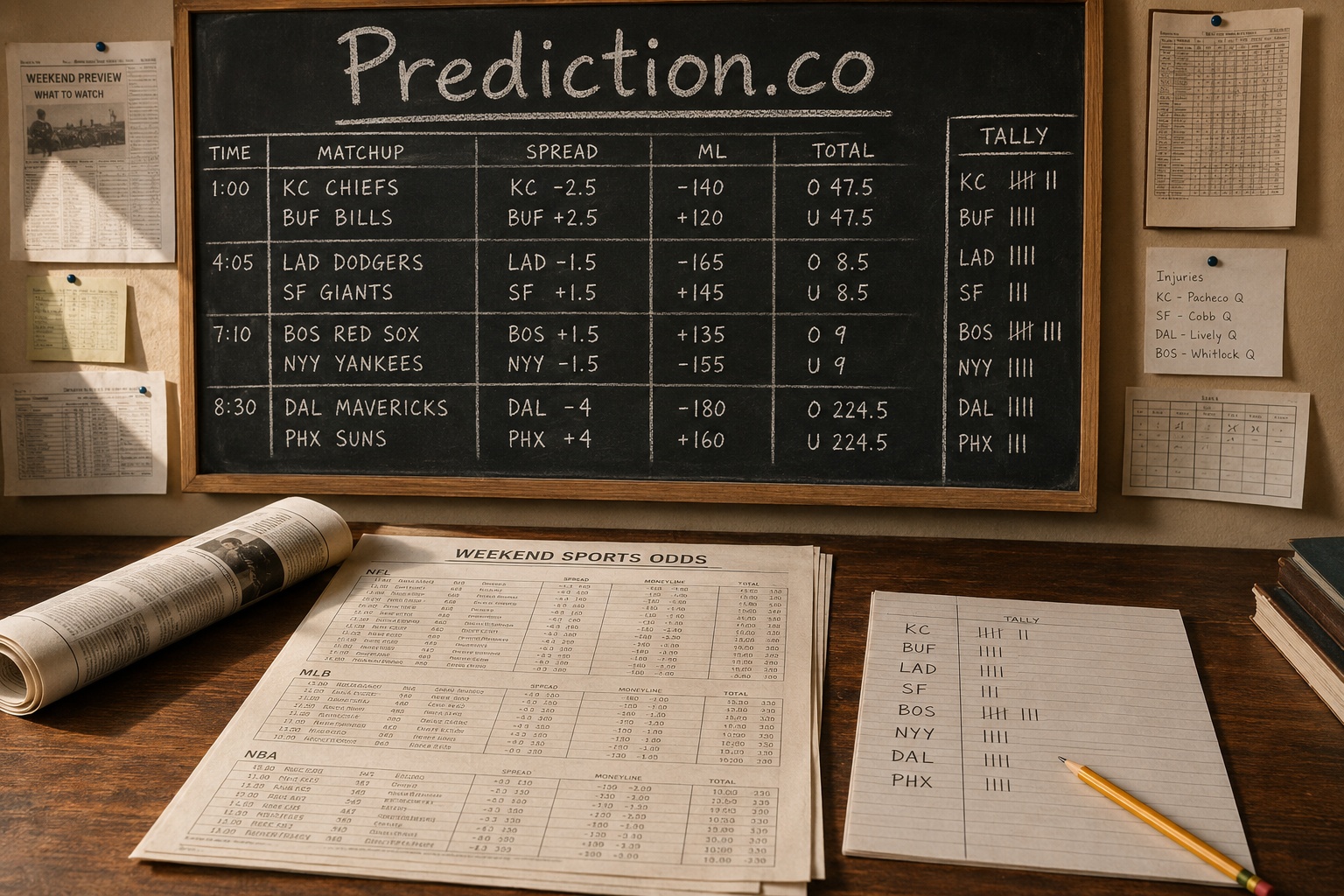
I keep coming back to a simple editorial gap in sports coverage: we have no shortage of picks, but we have far fewer places that explain the structure of a prediction. A number appears, a favorite is named, and the conversation races toward whether the call was right. The interesting work happened before that moment. What information moved the estimate? Which assumption carries the most weight? How fragile is the number if a starter sits or the weather changes? A sports desk at Prediction.co could make that work visible.
The voice should be closer to a careful beat reporter than a tout. I would organize the desk around leagues, games, and forecast questions, with every page stating the time of the estimate. A 62 percent chance on Monday is not the same object as a 62 percent chance ten minutes before play. Rosters, travel, rest, and venue conditions arrive on different schedules. Showing that timeline would teach readers why a responsible prediction changes.
Build the page around the question
Each forecast should begin in plain language: “How likely is New York to win this matchup?” or “What is the chance this team reaches the postseason?” Below it, the page can show the current probability, a restrained history line, and the few factors that matter most. The goal is not to overwhelm a reader with a model’s entire feature set. It is to reveal enough structure for someone to understand the claim and challenge it intelligently.
The second layer should distinguish model input from editorial judgment. Injuries and recent performance may enter a statistical estimate. A reporter may also know that the listed status of a player hides real uncertainty. If a desk changes a number because of reporting or judgment, it should say so. The separation creates trust and gives the newsroom a reason to exist beyond running code.
I would borrow the calibration habit used by professional forecasters. If the desk labels one hundred events as 60 percent likely, roughly sixty should occur over time. A single upset does not disprove a good estimate, just as a favorite winning does not prove one. The American Statistical Association’s education resources offer a useful doorway into verification and help explain probability without pretending it is certainty.
Make the archive part of the product
Most prediction pages disappear into the feed. Prediction.co should keep them. The archive would preserve the opening estimate, meaningful revisions, the final pregame estimate, the outcome, and a short postmortem when the desk missed badly. Readers could filter by team, league, forecast range, or confidence band. Editors could look for recurring blind spots instead of celebrating isolated wins.
That record changes behavior inside the newsroom. Writers become more precise when they know the original language will remain visible. Model builders get a practical error log. Readers learn which kinds of questions the desk handles well and which remain difficult. The archive is not a punishment mechanism; it is the evidence that the operation wants to improve.
There is also room for a weekly “forecast meeting” format. An editor could select three numbers that moved, ask the analyst what changed, and invite the beat reporter to describe what the data may be missing. The meeting could exist as an article, a short audio program, or a live segment. The recurring device gives the brand a human rhythm while keeping the probability at the center.
Serve fans without imitating a sportsbook
The visual language matters. I see scorebook paper, cool daylight, chalk lines, and a wall board revised throughout the day. I do not see flashing prices, urgent countdowns, or a trading interface. The product should feel like a room where people compare evidence. That distinction would make Prediction.co useful to fans who care about likely outcomes but do not want every sports conversation framed as a transaction.
Explanatory modules can answer the questions people repeatedly have: why 70 percent events still fail, why small samples distort recent form, why home advantage varies, and why an average forecast can conceal different game scripts. The NCAA statistics portal, official NBA statistics, and official NFL statistics can supply primary records where licensing permits, while every league page should identify its data source and update time.
The desk could also publish “no forecast” decisions. Some events do not have enough reliable information. A postponed game, unclear roster, or changed competition format may make a number more decorative than useful. Saying no demonstrates editorial standards. It reminds the audience that the objective is not to fill every empty cell on a board.
A product with several doors
The public publication is one door. A membership layer might offer deeper methodology notes, alerts when a forecast crosses a meaningful threshold, and tools for comparing a reader’s intuition with the desk. A team or media partner might license clear forecast graphics. A show could use the board as its daily spine. None of these needs to compromise the editorial record if probabilities, changes, and outcomes remain public.
I learned in building category businesses that the domain works hardest when it describes a repeated user action. People can say, “Check the prediction,” and the address feels like the natural next sentence. That is stronger than inventing a brand and then spending years explaining what it does. It also creates a responsibility: the product has to deserve such a direct name.
My first ninety days would be deliberately narrow. Choose one league. Define ten repeatable forecast questions. Publish the methodology and revision policy. Run the desk privately long enough to find data problems, then open the archive on day one. Add a weekly review and invite outside criticism. Expansion should follow calibration and audience use, not the urge to cover every scoreboard.
The enduring idea is a sports publication that treats prediction as accountable reporting. The reader gets a current view, a reason it changed, and an honest record afterward. That is enough to make the name feel like a real desk rather than a promise of perfect foresight.